
Mental Health and Wellbeing
The Importance of Wellbeing
We know from research that children with low wellbeing are more likely to have problems in their lives, including their physcial and mental health.
It is important for society as a whole, that children have the right support around them at home, at school, in their neighbourhood and beyond, to make sure every child has the opportunity to thrive and flourish.
Click on the video link below -
Zones Of Regulation.
What are the zones of regulation?
Zones of Regulation is an approach used to support the development of self-regulation in children. All the different ways children feel and the states of alertness they experience are categorized into four coloured zones. Children who are well regulated are able to be in the appropriate zone at the appropriate time.
Teaching the zones gives children a shared language to talk about their emotions by associating them with highly visual coloured zones. The approach is based on research and is highly respected as a systematic, cognitive behavioural technique leading children to greater independent regulation. It helps to teach children to identify their feelings, their levels of alertness, to understand how their behaviour influences those around them and gives them the tools they can use to manage their feelings.
How do the Zones of Regulation help children?
- It provides a vocabulary to talk about emotions
- It helps children recognise their own emotions
- It helps children to detect the emotions of others
- It helps them recognise what might trigger certain emotions
- It helps them see how others may interpret their behaviour
- Gives them tools for problem solving
Why are we introducing this?
- It gives the children and adults the right words – a common language – to talk about emotions in a way that is non-judgemental
- It is simple for everyone to understand
- It teaches healthy coping and self-regulation strategies
A person who can self – regulate is able to:
- Remain calm in a stressful situation
- Cheer themselves up after a disappointment
- Know when they are experiencing an emotional overload and adjust.
Important things to remember:
- There is no ‘bad’ zone.
- Everyone experiences all of the zones at different times and different circumstances.
- We can’t change the way children feel but we can help them manage their feelings/states and behaviours and validate their feelings, ‘I can see you are angry and I understand, but it is not okay to …’
- You can be in more than one zone at a time
- If a child is confident using words to describe their emotions, they might not always need to relate this to a zone. However, making links to the zones will help them choose the right strategy to manage their feelings.
- If a child is in the red zone, you must limit the verbal – this is not a teachable moment! Instead, discuss the use of tools when the child is calm and well regulated and plan for if/when it happens again.
As a school we have invested heavily in developing this and supporting all of our children so that they have the skills ofr school and throughout life.
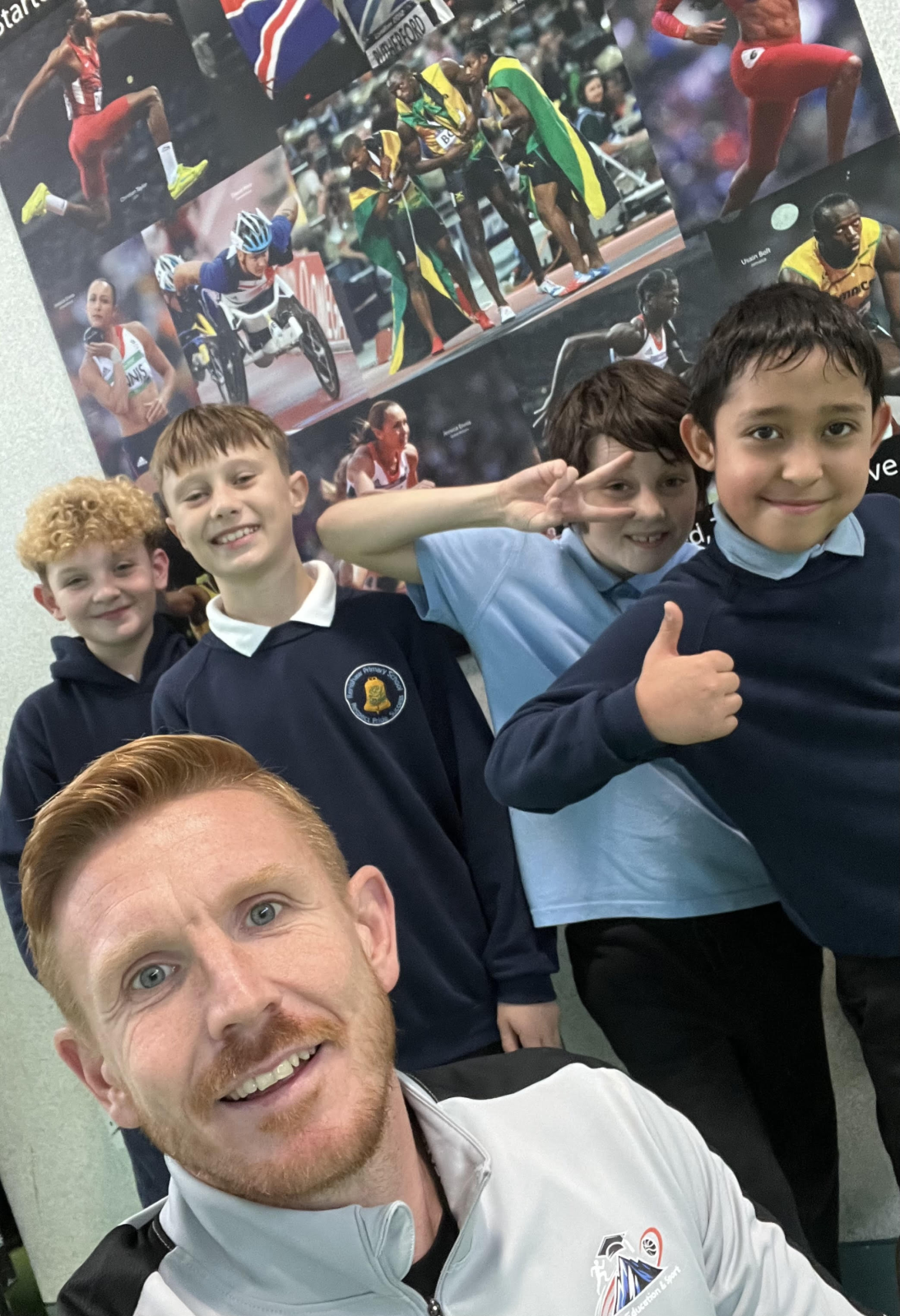
Our first Zones of Regulation support cohort with Lee Coddington - (Peak Education & Sport)
Each student also completed a short survey to reflect on their understanding of the Zones of Regulation and the overall programme.
The results were extremely positive:
-
100% of students can now identify which emotions belong to each zone.
-
100% of students can identify a strategy to use when feeling dysregulated.
-
100% of students felt more confident in their ability to tell an adult how they are feeling.
-
100% of students reported that the programme has increased their confidence a lot.
"Let's Talk Wednesdays" and our Renishaw Mental Health Ambassadors
"Let's talk Wednesdays" is run by Miss Ford and our Year 6 team of Mental Health Ambassadors and encourages the junior children to talk whist playing with a range of older children during Wednesday lunch times. The Mental Health Ambassadors, also meet and greet on the doors to each school block and year group on a Wednesday morning from 8.40am. The Year 6 children are specially selected as caring role models to children right across the school and are mentored by Miss Ford herslef who is ELSA trained.
Due to the popularity of both activities, we are currently looking at ways of rolling this out on other days aswell.
After all... "It's good to talk!"